
The Indian Institute of Science (IISc) and Groww Foundation have launched a semiconductor skill development programme to train the next generation of talent, with a focus on encouraging participation from women and young students.
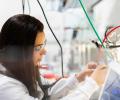
Researchers at IIT Bombay have developed a DNA-based strategy to make drug-resistant bacteria responsive to antibiotics again, addressing the growing crisis of antimicrobial resistance.
Prime Minister Narendra Modi has praised the Anveshana programme of Prayoga Institute of Education Research for its work in making scientific research accessible to school students. The programme, launched in 2022, supports student-led research projects and provides hands-on learning opportunities.
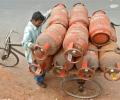
Researchers at CSIR-NCL have developed a technology for producing dimethyl ether (DME) as an alternative to liquefied petroleum gas (LPG), potentially reducing India's reliance on imports and enhancing energy security.

While India's interplanetary ambitions remain significant, the current pace of financial and technical progress raises questions about whether the 2027-2028 timelines can be met.
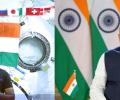
The interaction is planned via a telebridge set up at the U R Rao Satellite Centre in Bengaluru, said the Amateur Radio on International Space Station (ARISS), which facilitates interaction of school students with astronauts on the orbital laboratory.
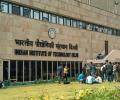
IIT Delhi, in collaboration with the University of Exeter, is developing cutting-edge sports technology, including wearable ultrasound sensors for injury prevention and helmets that can detect concussions in real-time, potentially revolutionising athlete safety and performance.

rediffGURU Nayagam PP advises young aspirants how to pick the right course and career.

For decades, multinational pharmaceutical companies and Indian drugmakers worked in ways that supported each other: MNCs brought innovation and brands, while Indian companies built scale through generics and cost efficiency. There was an important overlap - generic drugs - but this is shrinking fast. And the consequences are reshaping India's gigantic pharmaceutical market.

Hyderabad is rapidly emerging as a strategic hub for multinational companies (MNCs) deepening their focus on artificial intelligence (AI), life sciences, and global capability centres (GCCs), supported by the city's strong pharmaceutical (pharma) base, deeptech talent pool, and a policy environment that encourages high-value investment.

'Our problem is not a budget deficit but a trust deficit. We need to trust our institutions and industries to innovate and lead. That is the way forward for India.'

"The India lab of IBM is the youngest among the eight such centres worldwide and since its inception in 1998, its team of engineers has grown to more than 90," a spokesperson of the lab said.

India is set to take its first steps towards its own human space flight when the uncrewed Gaganyaan mission soars to the skies later this year. Private players in the space sector are also gearing up for launching satellites on home-built rockets.

'The heat shield technology for re-entry vehicles was first mastered in DRDO for the Agni missile.' 'This is why the Americans were so opposed to Agni in the 1980s, unlike other missiles -- it was a re-entry vehicle.'

Researchers from the Indian Institute of Technology-Palakkad (IIT-Palakkad) have introduced a pioneering method of generating renewable energy from human urine.
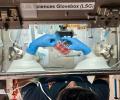
The $1.2 billion in-space manufacturing market is expected to grow and be worth more than $20 billion by 2033.

NASA, Axiom Space, and SpaceX are now targeting 12.01 PM (IST), Wednesday, June 25, for launch of the fourth private astronaut mission to the International Space Station, Axiom Mission 4, NASA said.

The Enhanced Pinaka has demonstrated a range of 75 km and an ability to strike within 10 metres of where it is aimed. This allows a Pinaka battery to destroy a terrorist camp, or an enemy post, logistics dump or headquarters, without sending soldiers across the border.
The sad part of the whole story was that, unlike China, India had no such serious security problems (it had a Friendship Treaty with the USSR) and that it violated a sacred trust by clandestinely using the Canadian reactor and American heavy water to make this weapon. Nothing damaged the NPT as much as the Indian nuclear explosion did, declares Dr A Q Khan

The mission was originally scheduled for lift-off on May 29 but was put off multiple times when engineers detected a liquid oxygen leak in the boosters of the Falcon-9 rocket and NASA also detected leaks in the ageing Russian module of the ISS.

India's Group Captain Shubhanshu Shukla became the 634th astronaut to travel to space as he entered the International Space Station on Thursday after a 28-hour journey.
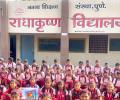
'There'll be extended periods where things aren't working in your favour. But if you believe in the cause profoundly, then you simply persevere.'
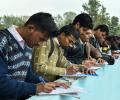
rediffGURU Aasif Ahmed Khan counsels students on the best career options in tech and engineering.
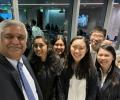
Prof Anantha Chandrakasan has been named Massachusetts Institute of Technology's new provost, the first Indian-American to serve in this leadership role.

The only other company working on hydrogen cars in India is Toyota Kirloskar Motor.
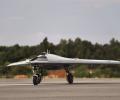
The Defence Research and Development Organisation on Friday successfully carried out the maiden flight of the indigenously developed unmanned aircraft at Chitradurga, Karnataka.

From tackling visa woes to admission counselling, rediffGURU Dr Karan Gupta helps you choose the right course and country to study abroad.

India's Group Captain Shubhanshu Shukla and three other astronauts on Thursday reached the International Space Station as the Dragon spacecraft docked with the orbital laboratory.
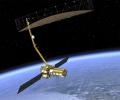
NISAR will not be used for surveillance and will be used to observe the earth.
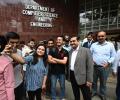
'If you align your ambition with India's rise, the peak of your careers will unfold alongside the peak of India's power.'

IIT Kanpur has announced a breakthrough in stealth technology, which would make tanks and fighter aircraft invisible, or near-invisible to enemy radar.

India has its share of both large tech companies and large national laboratories, but why is it that these don't seem to be at the forefront of any innovation news headlines? asks Ajit Balakrishnan.
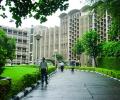
Contributions made to public funded universities, IITs, national laboratories and autonomous bodies engaged in conducting research in science, technology, engineering and medicine has now been recognised as part of CSR by the government.

After Chennai, it is Coimbatore, Madurai, and Tiruchirappalli, that are emerging as manufacturing hubs. Coimbatore is India's top Tier-II city in terms of the number of GCCs, according to a report by Cushman & Wakefield.
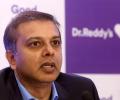
Pharma major Dr Reddy's Laboratories delivered a muted operational performance in the fourth quarter of financial year 2024-25 (Q4FY25), even as revenue growth remained healthy. Lower gross margin performance and muted domestic growth are key concerns. Most brokerages have a "Sell" or "Reduce" rating as there are uncertainties related to the development of a new product portfolio and the launch timelines.

Twice every 12 days, the NISAR satellite will scan nearly all of earth's land and ice surfaces to measure changes in the planet's ecosystems, growth and retreat of its land and sea ice, and deformation of its crust.

Research and development (R&D) spending by BSE 100 companies has grown steadily, rising from 0.89 per cent of revenue in FY20 to 1.32 per cent in FY24, averaging around 1 per cent over the period in-between, according to data compiled from Bloomberg and company annual reports. Also, these companies more than doubled their R&D spending in absolute terms over these five years: From Rs 25,041 crore to Rs 63,072 crore. While this reflects a prioritisation of innovation, corporate R&D investment remains relatively conservative.

'When Dr Murli Manohar Joshi wanted to start a course on astrology, Jayant was the first one to have the courage to stand up and say astrology is not science.' 'That's a very rare quality -- to stand up to authority.'
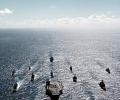
United States Navy scientists have successfully flown a radio-controlled airplane that runs purely on fuel derived from sea water.

The Uttar Pradesh government, citing a scientist, has asserted that Ganga water at the ongoing Maha Kumbh in Prayagraj is as pure as "alkaline water", debunking concerns raised by the Central Pollution Control Board (CPCB) about water quality. The government claims that a scientist found no bacterial growth or decline in the water's pH level, despite millions of devotees bathing in the river. However, experts caution that the quality of the Ganga water is not static and can vary greatly depending on various factors.
